

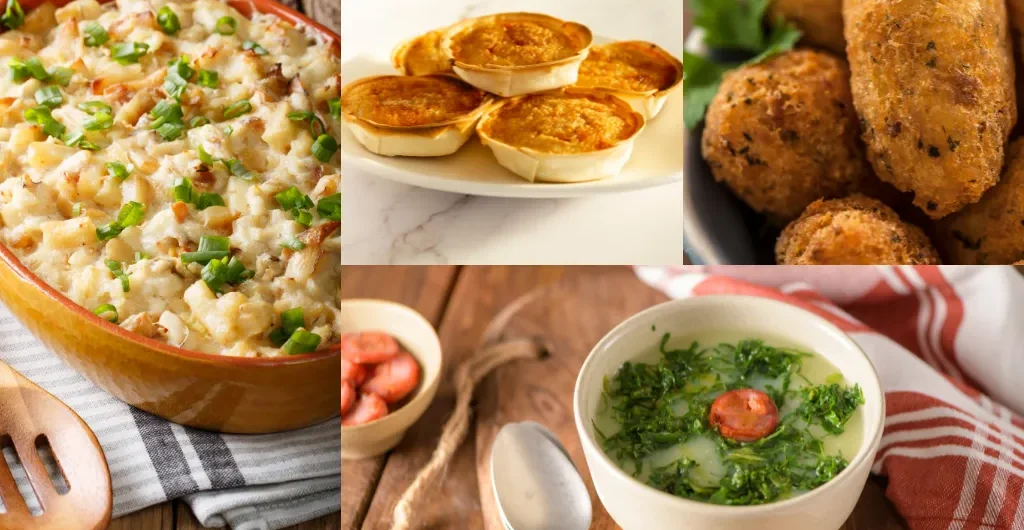
If there’s one thing we can say about the Portuguese, it’s that we love to eat. Sharing a hearty meal with family and friends isn’t just a habit. It’s a cornerstone of our culture.
It’s no surprise, then, that Portuguese gastronomy has earned worldwide recognition, offering an incredible variety of mouth-watering dishes. In this article, we invite you to dive into the rich and flavorful world of traditional Portuguese cuisine.
We’ll begin with the beloved starters and snacks that open every meal, move on to the most iconic main courses, and finish, naturally, with irresistible desserts and sweets. Ready to savor the journey? Let’s go!
Starters and Snacks
Pastéis de Bacalhau
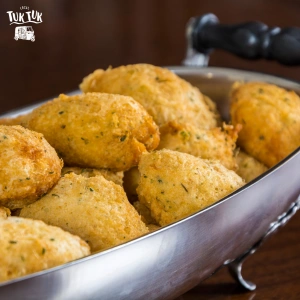
These golden, crispy fritters are made with shredded cod, potato, onion, and parsley. Crunchy on the outside and soft inside, they’re a true icon of Portuguese cuisine, originating in the north of the country. The earliest codfish cake recipe dates back to 1841, but the version we know and love today first appeared in 1903.
Caldo Verde
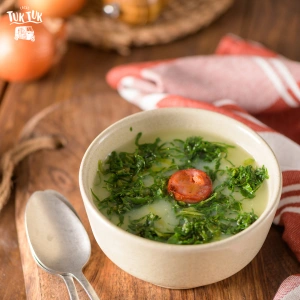
A comforting soup that’s a staple in Portuguese kitchens. Made with kale, potatoes, onions, and slices of chorizo, Caldo Verde is enjoyed year-round but is especially linked to summer festivities in towns across Portugal. Simple, hearty, and full of flavor.
Sopa da Pedra
This dish comes with a story as rich as its taste. Associated with the town of Almeirim, its name means “rock soup.” Startled? Well, you can relax because you’ll not be fishing for stones out of your soup! The name comes from the origin myth associated with this dish.
Legend tells of a monk who convinced villagers he could make soup with just a stone. Curious, they offered ingredients, and the monk created a delicious meal of beans, meats, sausages, and vegetables—saving the stone “for next time.” Today, you’ll find no rocks in your bowl, only a deeply flavourful soup.
Chouriço Assado
This snack is one of the simplest on this list, as it’s only roasted chorizo, but we couldn’t help but include it. Chorizo and its many variations are a staple in Portuguese cuisine, as they are an ingredient of many of the dishes we talk about here.
On its own, chorizo is absolutely delicious when eaten roasted and can be commonly found in traditional Portuguese pubs or during celebrations, eaten on bread.
Peixinhos da Horta
Despite the name (“little fish from the garden”), this dish is vegetarian. Green beans dipped in batter and fried until golden, Peixinhos da Horta are a classic snack and the inspiration behind Japanese tempura—a testament to Portugal’s global culinary influence.
Caracóis
Snails cooked with herbs, spices, and garlic can only be found during the summertime in restaurants and cafés. Even though we’ve grouped it with the starters and snacks, most of the time, the Portuguese make a meal of it, gathering around the table with family and friends and enjoying the dish accompanied by cold beers.
Main Course
Bacalhau com Natas
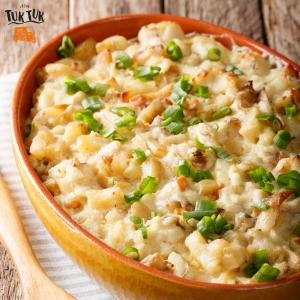
Bacalhau com Natas, or codfish with cream, is a really popular dish in Portugal that can be found not only in restaurants but also in many Portuguese homes. This plate is made using codfish, onions, potatoes, and cream. The ingredients are arranged in layers, and the final result is a mixture of the flaky and salty codfish with the buttery cream and soft potatoes. It really is a delight for the senses.
Cozido à Portuguesa
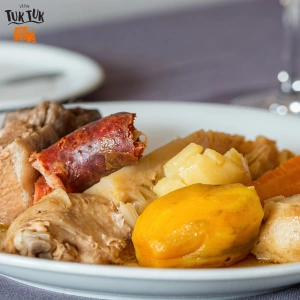
This main course is perhaps one of the most famous Portuguese dishes. Made with a wide variety of meats, sausages, and vegetables, in more traditional restaurants, it’s only served on Sundays.
Due to the number of ingredients present, the making of this dish can be a bit complex since it involves a few steps and some organization. However, all this work pays off since what’s left is a filling comfort meal. It’s the perfect classic Portuguese dish to try if you want to taste a wide variety of the best Portuguese meats and sausages all in one go.
Francesinha
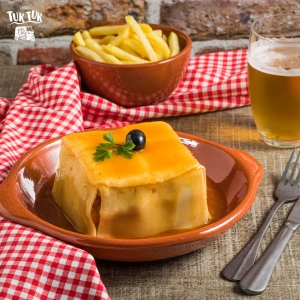
Closely associated with Oporto, Francesinha is usually described as a sandwich. However, don’t be fooled, because even though there’s bread involved, the amount of ingredients and the sauce that accompanies it make it anything but a light meal.
Created by Daniel David da Silva in 1950, it’s said that the Francezinha was inspired by the French croque-monsieur. The dish consists of two layers of bread filled with meat and sausages, which are then covered with melted cheese. The dish is usually accompanied by French fries and by the star of the show: the spicy tomato and beer sauce.
In restaurants, you can find many variations of the Francesinha, including vegetarian and non-spicy options.
Bacalhau/Polvo à Lagareiro
These dishes are a true testament to the Portuguese connection to olive oil. Made with either codfish or octopus, the meal is prepared with roasted potatoes, garlic, and coriander. Everything is then dossed in olive oil.
Even though the ingredient list isn’t one of the biggest we have here, the combination of flavors alongside the rich olive oil definitely steals the show.
Feijoada à Transmontana
Quite similar to Cozido à Portuguesa, Feijoada à Transmontana consists of baked beans, various meats, chorizos, and vegetables, accompanied by white rice. It’s a hearty and fulfilling classic Portuguese dish.
Açorda à Alentejana
Açorda is one of Alentejo’s most well-known dishes, and it dates back to the Moorish occupation of Portugal. Traditionally made by the people to make use of every bit of bread available, this traditional Portuguese food consists of bread (sometimes stale, so as not to waste anything), garlic, salt, olive oil, water, and aromatic herbs.
Even though the dish is traditional from the Alentejo region, you might find it served in restaurants all around the country, albeit with slightly different ingredients.
Cataplana de Marisco
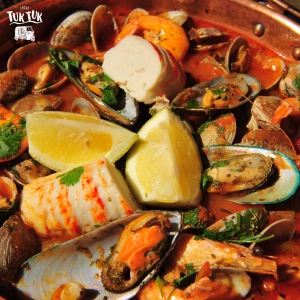
Due to Portugal’s extensive coastline, the country also has a deep connection with seafood dishes, and one of the best to try is Cataplana de Marisco. Traditionally from the Algarve region, this seafood dish is made using a special pot, the cataplana. There are several different recipes for this typical Portuguese dish, and you can even find versions that substitute the seafood with meat, fish, or vegetables
Carne de Porco à Alentejana
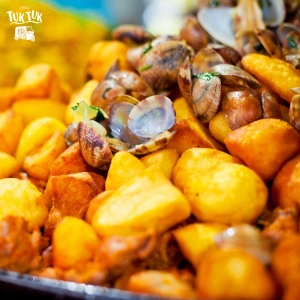
If you ever find yourself in Alentejo, this is a dish you simply must try, since it manages to connect meat and seafood in a mouth-watering way. This traditional Portuguese food incorporates fried pork with clams and fried potatoes. The sauce that usually accompanies the food is divine, and you must dip a piece of bread in it and savor every bit.
Leitão à Bairrada
Last but not least in our main course list of traditional Portuguese food, we have Leitão à Bairrada. Just like the name suggests, the dish is usually associated with the Bairrada region, but it can be found all over the country.
The making of the traditional Leitão à Bairrada is quite complex since it involves selecting the right suckling pig and roasting it in a wood-fired oven using particular techniques. The result is a tender meat with crispy skin.
Deserts & Sweets
Arroz Doce
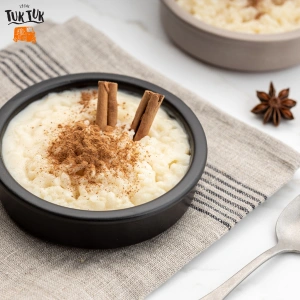
Arroz Doce, or sweet rice, is a beloved Portuguese dessert that graces both restaurant menus and family tables during special celebrations. Made with rice, milk, sugar, and delicately flavored with cinnamon and lemon, this creamy treat is as comforting as it is traditional. To finish, a crisscross pattern of cinnamon is usually sprinkled on top, making it as beautiful as it is delicious.
Serradura
Serradura, also known as Sawdust Pudding, is a classic Portuguese dessert you’ll often find in traditional restaurants. It’s a simple yet indulgent combination of crushed cookies, fresh cream, and condensed milk. The cream is blended with condensed milk, while the cookies are finely crushed, then layered alternately to create a rich, velvety texture with a delightful crunch.
Pastéis de Nata

No list of Portuguese delicacies would be complete without the world-famous Pastéis de Nata (custard tarts). These iconic pastries need no introduction—their reputation speaks for itself. Imagine a crisp, flaky pastry shell filled with smooth, creamy custard, baked to perfection. One bite and you’ll join the Pastéis de Nata lovers’ society.
Queijadas de Sintra

Typical of the Portuguese village of Sintra, the Queijadas are made with fresh cheese, sugar, eggs, flour, and a hint of cinnamon for a delicate flavour. These small sweets aren’t so much eaten as a dessert but are usually tasted alongside a cup of coffee as a small treat.
Travesseiros de Sintra
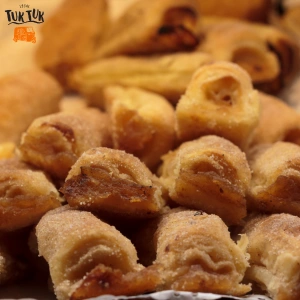
Just like the famous Queijadas, Travesseiros are a true Sintra specialty and an absolute must-try when visiting the region. The original recipe is a well-kept secret and can only be tasted at Casa Piriquita, the iconic pastry shop where it all began.
Despite the mystery surrounding the recipe, one thing is certain: these pastries are made with delicate puff pastry filled with a rich egg and almond cream, then dusted with sugar. They pair perfectly with a hot cup of coffee, especially on a chilly winter day.
Although Travesseiros are synonymous with Casa Piriquita, you’ll also find delicious versions at places like Casa do Preto or Dona Estefânia. Each has its own twist, so why not try them all? After all, it’s for the sake of culinary science (😉).
Ovos Moles de Aveiro
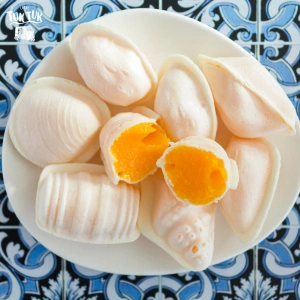
Ovos Moles de Aveiro are another Portuguese pastry that you need to try if you have a sweet tooth. Typical of the Portuguese town of Aveiro, it consists of a wafer sheet molded to resemble clams, fish, crabs, shells, or whelks, and filled with a sugar and egg cream.
Just like many other traditional Portuguese sweets, you can find it outside of Aveiro. So, you don’t have to miss out if your trip itinerary doesn’t include this Portuguese town.
Conclusion
Portuguese gastronomy is so diverse and rich that every region boasts its own traditional dishes and desserts—many even reinvent recipes from other parts of the country with a unique twist. This article is far from an exhaustive guide; condensing all the classics into a few paragraphs would never do them justice.
Instead, our goal was to introduce you to some of the most iconic flavors of Portugal, so you know what to look for and what to expect. And if you’re planning a corporate event or a family trip, why not experience these delights firsthand? Check out our tuk tuk tours and gastronomic experiences and let us take you on a journey through the heart of Portuguese culture—one bite at a time.



Comments